Updated on November 5, 2025

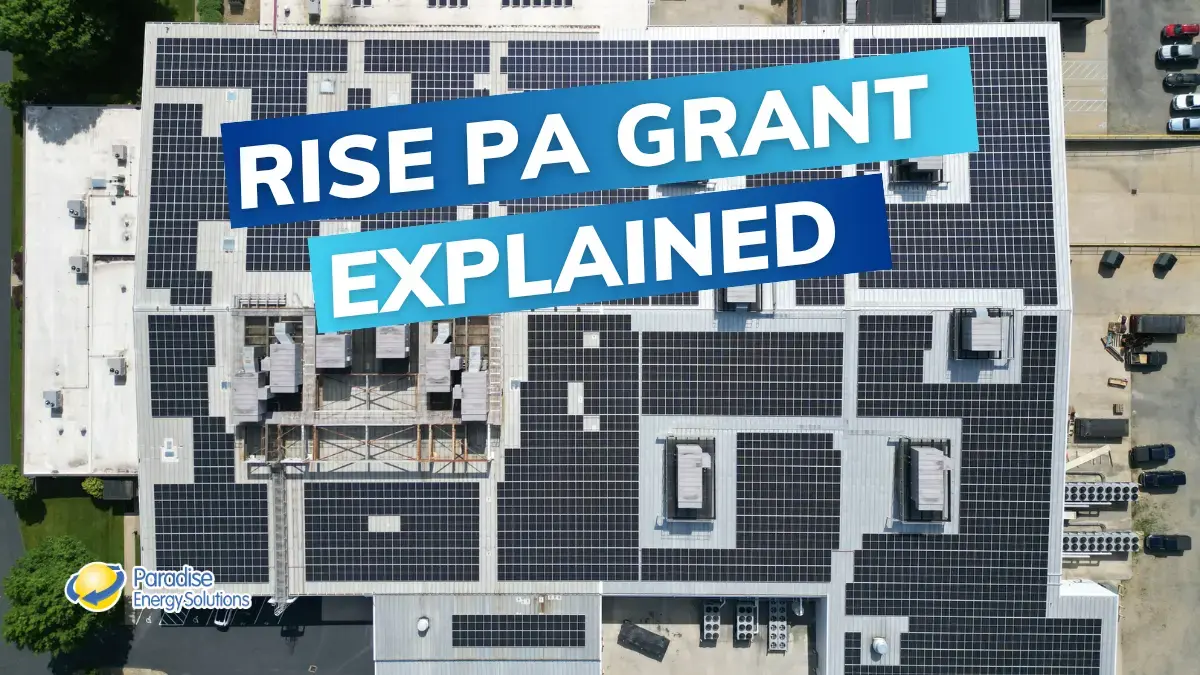
A Complete Guide to the RISE PA Grant for Pennsylvania Manufacturers

Learn how the RISE PA Grant helps Pennsylvania manufacturers save up to 50% on solar. See who qualifies, how to apply, and how much you could save.

These are the best solar installers in Delmarva

If you're a Pennsylvania manufacturer thinking about solar, now's the time to take a serious look.

The RISE PA Grant is a new, state-funded solar grant designed to help a select group of Pennsylvania-based manufacturing and agricultural businesses reduce energy costs and invest in long-term savings.

And here's why this is a game changer: eligible businesses can cover up to 50% of their solar installation costs with the Rise PA grant. But the opportunity isn't open to all businesses, and the first application deadline is August 15, 2025.

Let's walk through what this grant is, who qualifies, how much funding is available, and exactly how to apply so your business can capitalize on the cost savings that come with commercial solar investment.

What is the RISE PA Grant?

The RISE PA Grant is one of the most generous commercial solar grants we've seen in Pennsylvania and across the mid-Atlantic states we work in.
It's designed to help businesses in Pennsylvania, particularly manufacturing facilities and some ag operations, transition to clean, renewable energy by dramatically offsetting the upfront installation costs of solar.

Depending on your project size, here's how much funding you could qualify for:

  • Projects between $50,000 and $1 million: Receive up to 50% of the total project costs (Maximum award: $500,000)
  • Projects between $1 million and $66 million: Receive up to 30% of the total project costs (Maximum award: $20 million)

When combined with the federal solar tax credit, bonus depreciation, and long-term electric savings, this grant can turn your solar project into a cash-positive investment almost immediately after the system is energized, even before you factor in the long-term electric savings and SREC income.

We're currently working with several Pennsylvania businesses to capitalize on the RISE PA Grant. Take a look at two projects to see just how impactful this program can be, especially when combined with other incentives:

Manufacturing Facility in Lancaster County, PA:

  • Total Installed Cost: $88,810
  • Federal Tax Credit (40%): $35,524
  • Bonus Depreciation Tax Savings: $20,666.09
  • RISE PA Grant Award: $39,405
  • PPL Business Incentive: $2,555.60
  • Net Cost After Incentives: $-9,340.69

Manufacturing Facility in Lebanon County, PA:

  • Total Installed Cost: $989,100
  • Federal Tax Credit (40%): $395,640
  • Bonus Depreciation Tax Savings: $230,163.57
  • RISE PA Grant Award: $471,989
  • FirstEnergy Utility Incentive: $31,712.25
  • Net Cost After Incentives: $-140,404.82

Who Qualifies for the Rise PA Grant?

The RISE PA Grant is designed to support Pennsylvania businesses engaged in active manufacturing, but it's not available to everyone.
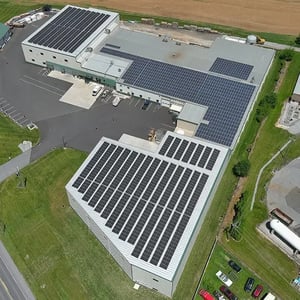
Solar Panels on The Roof of Raytec LLC in New Holland, PATo qualify, your business must:

  • Operate in Pennsylvania
  • Have on-site manufacturing - if you're just warehousing or distributing goods, you likely won't qualify. You must be fabricating, processing, or producing onsite.

Agricultural producers may be eligible if there's an on-site manufacturing step beyond raw production, such as egg packing, milk homogenization, or other processing.

For solar projects $1 million or more, your business must also fall under one of these NAICS sectors:

  • Sector 11: Agriculture, Forestry, Fishing & Hunting
  • Sector 21: Mining
  • Sector 23: Construction
  • Sectors 31-33: Manufacturing

If you're unsure whether your business qualifies, reach out. Our team can assist in making this determination.

When is the Deadline to Apply for the Rise PA Grant?

The first application deadline is August 15, 2025, for small-scale awards and August 29, 2025, for medium and large-scale awards.

But don't worry if you miss it. Additional competitive rounds will be held every four months through August 2028, or until the funds are exhausted.

Once you're awarded the grant, you'll have 12 months to receive permission to operate (PTO) on your solar project. You'll also need to complete a GHG Emissions Assessment 12 months after PTO as part of the program's long-term sustainability tracking.

How to Apply for the RISE PA Grant

If your solar project is under $1 million, our team at Paradise Energy Solutions can submit the grant application on your behalf. We'll handle the paperwork, help you gather the required documents, and walk you through every step.

For larger projects, we'll connect you with the right partners and grant-writing resources.

Either way, here's what you'll need to complete your Rise PA grant application:

  • A completed Site Emissions Assessment (available from PennTAP)
  • SAM.gov registration
  • A summary of your past and future sustainability efforts
  • 12 months of utility bills (not just electric)
  • W-9 Form
  • Financial commitment letter
  • Current financial statements

It might sound like a lot, but don't worry. We have an experienced in-house grant writing team that will help you every step of the process.

Ready to Cut Costs and Claim Your Share of the Rise PA Grant?

If you're a Pennsylvania manufacturer, ag operator, or another qualifying business, this is a limited-time opportunity to reduce your operating expenses, improve energy resilience, and invest in improving your bottom line at a significantly reduced price.

Our team of local solar consultants is ready to help you explore solar for your business. The first step is to request a site visit and custom quote. Don't miss out on this tremendous opportunity to essentially get paid to invest in the future of your business.

You've found the perfect spot for a ground-mount solar array. Maybe it's a back field on your farm or an open lot behind your facility. The savings look great. Then a new question comes up: will your township actually let you build it?

The short answer is that it depends on how your local zoning ordinance treats solar. Some projects get approved with a simple application in two to three weeks. Others go through public hearings, need a lawyer, and take 6 to 12 months. A few can't move forward at all.

The good news is that you can find out which path you're on before you sign a contract. Below, we'll walk you through why zoning for solar is getting harder, the four ways a township can approve a project, the costs to plan for, and how Paradise Energy checks your site's zoning requirements before you sign a contract with us.

One quick note: most of what follows applies to ground-mount systems. Rooftop solar usually faces far fewer zoning hurdles. If you're still deciding between the two, see our ground mount vs. roof mount comparison.

* This article is for general educational purposes and is not legal advice. Zoning rules vary by municipality and change often. For guidance on a specific project, consult a qualified attorney and the Paradise Energy Solar Consultant team.

Why Is Zoning for Solar Getting Harder?

In short, data centers. Data center development has exploded across the country. Many local governments have responded by tightening their zoning ordinances to control large commercial land uses.

The challenge is that solar often gets lumped in with those projects. A 250 kW array on a farm is very different from a massive data center campus. But under some new ordinances, both are treated as major commercial developments.

Here's what that looks like in practice:

  • Rules are changing fast. Townships nationwide have been updating or creating new ordinances since 2024. In many cases, projects already in progress weren't grandfathered in under the old rules.
  • Small systems are getting swept up. Some new ordinances treat systems as small as 10 kW, even residential ones, the same way they treat large power generators.
  • The stakes are higher. When zoning problems surface after a contract is signed, they can mean surprise costs, long delays, or a project that can't be built.

This is also why a neighbor's easy install a few years ago doesn't guarantee yours will go the same way.

First, What Is Zoning?

Zoning is a set of local government rules that divides a town or township into sections. It controls how land and buildings can be used in each section. (In Maryland, zoning is typically handled at the county level, but it works much the same way.)

When a township reviews a solar project, one of the first things it looks at is how the system will be used. Nearly every solar project falls into one of two buckets:

Type of Use What It Means Zoning Impact
Accessory use The system mainly powers the home, farm, or business on the same property. Usually very few regulations
Principal use The system is a power generator that feeds electricity directly to the grid. Much more complex review

Most businesses and farms install solar to offset their own electricity use, so their projects are typically accessory uses. The problem is that some newer ordinances classify even small systems as principal uses. When that happens, part of our job is working with the township to apply its rules in a way that fits the actual project.

The Four Ways a Township Can Approve a Solar Project

Every zoning ordinance spells out which approval path a project must follow. Four main pathways exist, and each carries more risk and complexity than the last.

Pathway Who Decides Public Hearing? Legal Counsel Risk & Complexity (1 to 10)
Permitted by right Municipal staff No Not needed 1
Special exception Zoning hearing board Yes Often recommended 4
Conditional use Elected township officials Yes Recommended 7
Variance Zoning hearing board Yes Strongly recommended 8 to 10

Risk and complexity scores reflect Paradise Energy's own experience across our service area.

1. Permitted by Right

This is the simplest path and what most people picture when they think of "zoning." Solar is allowed in your zoning district, so you don't need special approval.

  • Review is administrative, handled by township staff
  • You typically just submit project plans and pay an application fee
  • Approval usually takes about two to three weeks

2. Special Exception

You may also hear this called a "special use" or "special use permit." The ordinance allows solar in your district, but only if the project meets extra solar-specific requirements.

  • The project must meet both the zoning district's rules and the ordinance's solar rules, often no matter the system size
  • The township may add other reasonable conditions, such as a glare or noise study
  • The application is publicly advertised and heard by the zoning hearing board
  • Neighbors can object, and an approval can be overturned if they show real public safety concerns

3. Conditional Use

A conditional use is similar to a special exception. The difference is that requirements are tailored to your specific project, and elected officials make the final call.

  • The planning commission reviews the project and makes a recommendation
  • The application is publicly advertised and heard
  • Because elected officials decide, the outcome can be influenced by local politics

4. Variance

A variance is the most difficult path. It's needed when the ordinance does not allow the project as proposed. You're asking for formal legal relief from the rules.

  • You must prove that the ordinance creates an unnecessary hardship
  • The hardship has to come from something unique about the land or the zoning district, not the project itself
  • Financial goals, like wanting a better return on investment, don't count as hardship
  • An approved variance sets a new legal precedent for the zoning district, or even the entire ordinance

There are two kinds. An area variance asks for relief from specific ordinance requirements. A use variance asks to allow something the ordinance bans outright, such as a township that prohibits systems larger than 10 kW. Use variances are the hardest of all to win.

Why Do Timelines and Fees Vary So Much From Township to Township?

Even two projects on the same pathway can have very different experiences. Much of it comes down to the calendar and how familiar a township is with solar.

Boards usually meet once a month. If a question comes up at a meeting, the answer often has to wait until the next one. A few small issues can push a project back by several months. In tougher cases, zoning and permitting alone can stretch to 6, 9, or even 12 months.

Here are some of the most common reasons a project slows down:

Confusion About the Approval Pathway

  • Ordinances can have unclear or conflicting definitions for solar
  • A project may be placed on the wrong pathway or given the wrong label, such as a solar generator being classified as community solar
  • The word "variance" gets used loosely, even for projects that are really special exceptions
  • When the rules are unclear, a project can end up defaulting to the variance process, which is the hardest path

Requirements That Go Beyond the Ordinance

  • A township may ask for studies or conditions its own ordinance doesn't require, such as a glare study on a permitted-by-right project
  • Applicants may be asked to prove hardship even when they aren't requesting a variance
  • Public opposition can come up even when there are no valid safety concerns

Process and Paperwork

  • Input from fire, police, or emergency services may be treated as a final decision instead of advice
  • Advisory county or state bodies may be treated as the decision-maker
  • Some townships require every other permit to be finished before zoning review can begin

Third-Party Reviewers

Townships that don't see many solar projects often hire outside engineering firms or code agencies to review them. This can be one of the biggest sources of surprise costs and delays.

  • Review fees can reach tens of thousands of dollars and may not be known upfront
  • Plans may go through several rounds of detailed revisions
  • Each round can add weeks or months

None of this means your project will run into trouble. It means it's worth knowing the rules going in. When questions like these come up, our team works with the township to ensure its ordinances and procedures are followed correctly.

What Zoning-Related Costs Should You Plan For?

The cost of the solar equipment and installation is only part of the picture. Depending on your township, you may also see some of the costs below.

To make this concrete, here's a real example of the permitting overview our team prepared for a 250 kW ground-mount project in New York:

Cost Item Estimate for This Project
Decommissioning bond (customer responsibility) About $55,000 to $65,000
Financial security About $2,500 to $4,000
State environmental review determination (3rd party) About $2,000

These are estimates for one project. Your costs will depend on your township, system size, and site, and they may go up or down.

Decommissioning bond. This is a financial guarantee that the system will be removed properly at the end of its life. When required, it can be one of the highest zoning-related costs.

Financial security. Some townships require a separate financial guarantee for approval.

Third-party review fees. As mentioned above, outside reviewers can add fees that reach tens of thousands of dollars.

Studies and reports. A township may request additional studies, such as glare or noise studies, especially for special exceptions and conditional uses.

Legal counsel. Special exceptions, conditional uses, and variances often call for an attorney.

Site and environmental factors. We also look at streams, wetlands, enhanced setbacks, and floodplains. Building a ground mount in a floodplain is possible, but it usually means paying significant fees to the state based on the project's size and how much of it sits in the floodplain.

A Potential Way to Save

Some permits depend on how much land your project disturbs. In the example above, you could avoid stormwater and related permits by keeping site disturbance under one acre. Knowing this early gives you options, like adjusting the system's size or layout. That is why Paradise Energy digs into these requirements at the start of a project to keep costs down and avoid unexpected expenses during development. 

Do You Need a Lawyer for Solar Zoning Approval?

Not always. Many projects move forward without one.  In many cases, short-term legal fees are more cost-effective than fighting long-term procedural battles without counsel.

Either way, our team handles the zoning and permitting work behind the scenes, and we only recommend counsel if we know it's the best investment for your project.

How Paradise Energy Checks Your Zoning Before You Sign

We don't want you to learn about a zoning problem after you've signed a contract. So for qualified ground-mount projects, we do the research up front, while we're putting together your quote.

Here's how it works:

  1. We gather the rules. Our operations team pulls every ordinance and regulation that applies to your site. That includes township or county, state, and other agencies.
  2. We sort out what's required. Each permit or approval is marked as something we handle in-house, something that needs a third party (like civil engineering), or something that isn't required.
  3. We estimate the costs. Those findings are priced based on your system size and built into your proposal.
  4. We flag big concerns right away. If we find something that could add major cost or block your project, your solar consultant will talk with you about it directly.

We also review civil and environmental factors, like nearby streams, wetlands, and floodplains, during this same step. Once you move forward, we handle the permit paperwork itself as part of our six-step solar installation process.

Why This Matters for You

  • Fewer surprises. You see likely zoning costs in your proposal instead of as a change order later.
  • A clear picture of risk. You'll know which approval pathway your project likely faces and what could affect your timeline.
  • More options. Knowing the rules early can help you adjust your system's size or location to reach an easier path.
  • Better leverage. Understanding the ordinance puts you in a stronger position when working with the township.

Keep in mind that these are estimates. Actual costs may be higher or lower once the township reviews your project. But an informed estimate is far better than a surprise.

Be Cautious of a Quote That Sounds Too Easy

When you’re comparing proposals, a low price and a promise of “no zoning concerns” can be tempting. Sometimes a project really is that simple. But zoning is often where the toughest problems show up.

We’ve had business owners come to us after signing with another installer who told them their project would be straightforward, low cost, and quick. Then the project stalled in zoning or ran into costs nobody had planned for. By that point, they had already lost time, and sometimes money, and they needed help figuring out what to do next.

Before you choose an installer, ask a few questions:

  • Have you reviewed the zoning ordinance for my property?
  • Which approval pathway do you expect my project to follow?
  • Are zoning-related costs, like bonds, studies, or third-party review fees, included in this quote?
  • What happens if the township requires something that isn’t in the quote?

A careful answer to these questions is worth more than a confident promise. A lower bid that leaves out zoning costs may not end up being the lower-cost option.

Author image for Andy Schell

Written By Andy Schell

Andy is the Sr. Marketing Manager at Paradise Energy Solutions, where he creates easy-to-understand educational content for people exploring solar. With nearly a decade of solar experience and Solar Energy International’s PV101 training, he focuses on giving customers the knowledge they need to make informed decisions.

Loading table of contents...

Analyze Your Solar Return on Investment in 2026 with Our Solar ROI Calculator

Get Your Free Guide to Going Solar

Subscribe to
Our Newsletter

Get the latest news, insights, and exclusive content delivered straight to your inbox.

Subscribe

This field is for validation purposes and should be left unchanged.

Related Blog Posts