KEY TAKEAWAYS
- Unpredictable energy costs do more damage than high ones.
- Chasing the lowest rate often backfires.
- Procurement tools like fixed-rate contracts and hedging can reduce short-term exposure but don’t remove long-term market risk once a contract expires.
- Efficiency cuts your bill but doesn’t stabilize the price of the electricity you still buy.
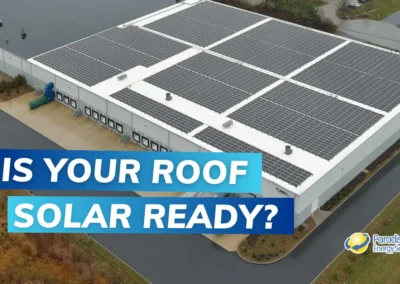
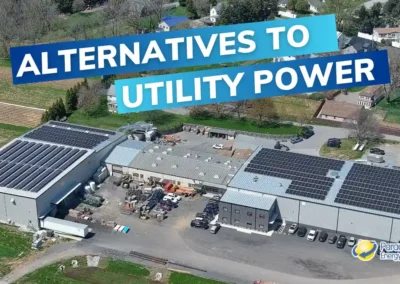
- On-site solar shifts the conversation from negotiating how to buy power to reducing how much power you buy at unpredictable market rates.
A low energy rate can feel like a win — right up until the month your bill jumps for reasons that have nothing to do with how your business operates. That’s the real problem with unpredictable energy costs. It’s not just that power is expensive. It’s that an unpredictable bill is hard to budget, hard to price around, and hard to explain to a board or a lender. When energy costs move with market swings, grid pressure, or policy changes, even a “good” rate can become a business risk. For owners trying to protect margins, certainty often matters more than chasing the lowest number on paper.
The Hidden Cost Is Uncertainty
Most conversations about energy costs start with the rate: cents per kilowatt-hour, contract terms, supplier offers, or the monthly total at the bottom of the bill. While those numbers matter, they’re not the whole financial picture.
For a business, uncertainty carries its own cost. If electricity is a significant operating expense, unpredictable swings make it harder to answer basic questions that go hand in hand with running a business.
What will overhead look like next quarter? Should prices be adjusted? Is there room to buy equipment, hire, or carry more inventory? Can a project still clear the margin you expected when you priced it?
At this stage, energy cost volatility stops being a utility issue and becomes a planning issue.
A stable energy cost gives owners and finance teams a cleaner baseline. It doesn’t guarantee every business decision becomes easy or remove every utility charge, but it does make one major expense less of a mystery. This is significant because most business owners aren’t just trying to spend less; they’re trying to make decisions with confidence.
Why Business Energy Costs Have Become Harder to Plan Around
Energy prices can shift for reasons that have nothing to do with your daily operations. The unfortunate reality is that a business may use the same equipment, maintain the same hours, and serve the same customers but still see its energy costs move because the broader market shifted around it.
While global market fluctuations and grid pressures can be key drivers in pricing shifts, another energy planning resource notes that businesses face rising costs tied also to supply, demand, and regulatory changes.
The effect of these forces shows up in very practical ways, like higher bills, a harder budget meeting, or a pricing model that suddenly needs revisiting.
Market Movement Doesn’t Wait for Your Budget Cycle
Most businesses plan in quarters, seasons, or fiscal years. Energy markets don’t. Costs can be affected by fuel markets, local grid constraints, weather-driven demand, regulatory changes, supplier contracts, and infrastructure pressure.
This doesn’t mean every month will bring a dramatic spike, but it does mean the business is exposed to an input cost it doesn’t fully control.
Demand Growth Adds Pressure
Electricity demand is also an influential player in the market. The Business Council for Sustainable Energy reported that in 2025, U.S. electricity demand rose considerably for the first time in decades, coinciding with rising electricity prices. Additionally far-reaching and unpredictable policy changes have added to the uncertainty.
The takeaway for an individual business is simple: The price on your bill is influenced by a larger system. Even if you run a tight operation, your costs can still be affected by conditions outside your walls.
Why the Lowest Rate Can Be the Wrong Goal
There’s nothing wrong with wanting a lower rate. Every dollar saved on overhead helps, but attaining the “lowest rate” is not the only measure of a good energy decision.
A low rate is useful only if it supports how your business actually plans and operates. If it comes with short-term exposure, unclear future costs, or a pricing structure that’s hard to forecast, it creates a different kind of risk.
At the end of the day, the best choice depends on the business:
How Volatility Shows Up Beyond the Utility Bill
The obvious result of energy volatility is a higher bill, but the less obvious cost is how that uncertainty changes decisions across the business.
When energy costs are unpredictable, owners build in a cushion. They price more conservatively, delay improvements, postpone hiring, or avoid commitments that would otherwise make sense.
Even if it never shows up as a line item, this caution has a cost:
- Pricing gets harder when energy is tied to production, service delivery, refrigeration, or machinery. Unstable costs make it harder to quote jobs confidently.
- Cash flow becomes less predictable. Surprise increases compete with payroll, inventory, debt service, or seasonal purchases.
- Capital planning slows down. A project that looked affordable gets delayed when overhead becomes uncertain.
- Forecasts lose reliability. A budget is only as good as the assumptions behind it.
- Management attention gets pulled from growth toward reacting to cost changes.
At this point, the question commonly being asked is “How do we pay less this month?” But the more productive question is “How do we stop energy costs from disrupting decisions we need to make?”
What Energy Volatility Can Disrupt in Real Business Planning
For a manufacturer, an unexpected increase in electricity costs can turn a profitable production run into a thinner-margin job after pricing has already been quoted. Higher summer energy costs for a cold storage business can compress cash flow during the same season when refrigeration demand is highest. And unpredictable utility costs for a farm or food processor can make it harder to decide whether to expand equipment, add labor, or commit to a larger seasonal contract.
In each case, the issue is not only the higher bill but that the business made plans based on one cost assumption, then had to absorb a different reality. These common scenarios show why stable energy costs can be more valuable than chasing the lowest possible rate in the short term.
What Procurement, Fixed Rates, and Hedging Can Actually Do
Many businesses start with procurement because it’s the most familiar lever. They compare suppliers, evaluate contract terms, consider fixed-rate structures, or bring in an energy advisor. These tools can help, but it’s worth being clear about what they can do for a business and what they can’t do.
A fixed-rate contract can make the purchased energy rate more predictable for a period of time, and hedging strategies can help manage exposure to market movement. Additionally, a multi-year procurement plan can keep the business from making rushed decisions when a contract is about to expire.
These are tangible benefits, but the reality is that they’re still built around buying energy from the market. When the contract ends, the business usually returns to market conditions in some form. Fees, demand charges, delivery charges, and other bill components may also behave differently from the energy supply rate itself.
| Strategy | What It Helps With | Important Limitation |
|---|---|---|
| Fixed-Rate Contract | Creates more predictable pricing for purchased electricity during the contract term | Doesn’t necessarily control every bill component or future renewal pricing |
| Hedging | Can reduce exposure to certain market swings | Requires careful structure and doesn’t remove all risk |
| Multi-Year Procurement Plan | Encourages earlier, more deliberate energy decisions | Still depends on market options available when decisions are made |
| Energy Advisor Support | Can help interpret options and contract terms | Advice is only as useful as the strategy behind it |
Procurement can be part of a smart energy strategy, but it shouldn’t be confused with full control. It manages how you buy energy. However, it doesn’t change the fact that you’re still largely exposed to outside pricing.
If you’re comparing energy options, it helps to start with your usage history and bill structure. A practical commercial solar solutions overview can make those conversations more productive before you evaluate contracts, efficiency upgrades, or on-site generation.
The Role and Limits of Energy Price Forecasting
Energy price forecasting is valuable, but it’s not a crystal ball. It can help a business understand trends, compare timing, and avoid making decisions blindly, while supporting better conversations with suppliers, advisors, and internal finance teams.
But forecasting doesn’t create certainty. A forecast is an informed estimate based on available information, and it can be wrong because conditions change. As previously shown, the market is driven by unpredictable forces: Supply disruptions, demand shifts, regulatory changes, weather patterns, infrastructure issues, and policy decisions can all move the needle.
For a business owner, the more useful question isn’t “Can we perfectly predict energy prices?” Instead, it’s “How much of our financial plan depends on a price we can’t control?” Once that question is on the table, the conversation gets more practical.
Efficiency Helps, But It Doesn’t Solve Everything
Energy efficiency is often the first recommendation for lowering utility costs and for good reason. Better lighting, HVAC improvements, equipment maintenance, controls, and smarter scheduling can all reduce waste.
For offices and small businesses, heating and cooling habits may be a logical place to start. For manufacturers or farms, equipment runtime, refrigeration, ventilation, or irrigation loads may matter more. The right efficiency opportunities depend on how the business actually uses electricity.
In the stability conversation though, efficiency has a limit. It reduces consumption, but in reality, it doesn’t stabilize the price of each unit you still buy from the grid. A business that cuts waste but remains fully exposed to market pricing can still get hit with surprise bills when rates move.
On-Site Solar Changes the Conversation From Buying Power to Controlling Power
At some point, a business looking for stability has to ask a different question:
Instead of only negotiating how electricity is purchased, can we reduce how much electricity we need to buy at unpredictable prices?
This is where on-site solar enters the picture.
Solar isn’t a magic switch that removes every utility charge. The fact is that most commercial, agricultural, and residential systems stay grid-connected, and system performance depends on site conditions, design quality, usage patterns, utility rules, and long-term maintenance. Any honest solar conversation should include those caveats.
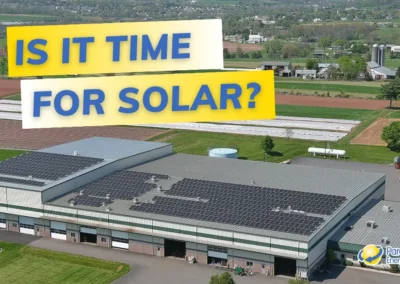
But when designed properly, solar can help a business control part of a fixed cost. The electricity produced by the system comes from an asset on your property, not from a rate that can change every time the market shifts. This is why renewable energy has long been discussed as a hedge against fuel price fluctuation.
For Paradise Solar customers, this is the real business case — long-term, predictable savings, not “free power” without context. A well-designed solar system reduces exposure to future utility rate changes by producing a portion of the electricity the business would otherwise buy from the grid.
Common Questions About Energy Cost Stability
These are the questions many owners ask once they stop looking only at the current month’s rate and start thinking about long-term risk.
Is a fixed rate always better than a variable rate?
No. A fixed rate can help with predictability, but it may not always be the lowest-cost option. The better question is how much uncertainty your business can tolerate. If a surprise increase would disrupt cash flow, margins, or planning, stability may be worth more than the chance of short-term savings.
Can a business accurately forecast future energy prices?
A business can forecast, but it can’t control every factor behind the forecast. Energy price forecasting is useful for planning and timing decisions, but it shouldn’t be treated as certainty. The more your plan depends on market prices behaving a certain way, the more risk remains.
Does solar mean the electric bill goes away?
Not necessarily. Most businesses stay connected to the grid, and bills can still include charges that solar doesn’t eliminate. The real value is often reducing the amount of electricity purchased at future utility rates and creating more predictable savings over time.
When should a business start looking at solar?
A good time is when electricity bills begin to affect planning, when the business owns or controls suitable roof or land space, and when leadership wants long-term certainty rather than repeatedly reacting to rate changes. A detailed review of commercial solar costs and incentives can help frame the decision before a proposal is built.
How to Start Taking Control of an Unpredictable Cost
Start by looking at your utility history. Identify whether the problem is usage, rate changes, demand charges, seasonal peaks, operational growth, or some mix of those. Then ask how those costs affect business decisions.
Are they changing your pricing? Delaying projects? Creating budget cushions? Making future planning harder than it needs to be?
Once you understand the risk, you can choose the right tools.
- Procurement may help stabilize purchased power.
- Efficiency may reduce waste.
- Monitoring may improve visibility.
- On-site solar may reduce exposure to utility rate changes and give your business more control over a predictable cost.
For Owners Who Want Honest Numbers, the Next Step Is a Site-Specific Conversation
Paradise Solar’s in-house team designs, installs, and maintains systems with long-term performance in mind, including support through our Triple Ten Guarantee. This is essential because cost certainty depends on the system working years after installation, not just looking good on a proposal.
If you want to see how solar can help lock in the rate for the electricity your system produces, start with a practical review of commercial solar panel installation or talk with a Paradise Solar advisor about your site, usage, and long-term savings goals.